

Master of International Business
Quantitative Methods STEM-Designated Program
Combine the Rigor of an MBA with Global Affairs
Draw on the foundations of sustainability – environmental, social, and financial – with the Master of International Business (MIB) to prepare to lead in addressing the world’s biggest challenges through business innovations.
Quantitative Methods
Tailored for those aspiring to master their quantitative skills, a STEM-designated program is designed for those interested in data analytics, finance, economics, or consulting.
You may also be interested in our STEM-designated Master of Science in International Economics.
Take the next step.
Learn more about what your future holds at Fletcher.
Business expertise with a global edge.
The world requires leaders to operate at the intersection of quantitative and contextual intelligence, rewarding those who can synthesize solutions in the overlap between business politics, economics, the law, technology, and data.
Program Highlights
- Rigorous curriculum offering a diverse array of electives such as artificial intelligence, geospatial modeling, and international finance
- STEM-designated Quantitative Methods coursework
- Career-centric program that emphasizes sustainability and data literacy
- Career acceleration grants are offered to accepted in-person business students
- No GRE/GMAT required for admission
- Scholarships and research assistantships available to eligible students
Why choose Fletcher?
The Fletcher School at Tufts University is one of America’s most reputable graduate schools uniquely offering interdisciplinary international affairs, business, and law degrees.
Experiential Learning
Conduct research, start entrepreneurial ventures, and gain internship and global experience, while consulting on critical issues with other future business leaders, diplomats, climate specialists, security professionals, and human rights lawyers.
A History of Excellence
For over 90 years, Fletcher has led the study and practice of international affairs at the intersection of the most complex challenges, in a world that’s ever-evolving.
Global Faculty Experts
Learn from professors of practice and renowned field experts with direct experience as leaders and policymakers.
Vast Alumni Connections
Build your professional network far beyond the Fletcher walls — through an unparalleled network of global alumni in business and beyond.
Ranked Among the Best
The Master of International Business is ranked among the top 12 programs globally by QS and the Hinrich Foundation for international trade, Master’s and MBA 2026.
STEM Designation
For students from outside the United States, the program’s STEM designation may also increase the duration of optional professional training (OPT) in the U.S. by two years, giving you more time to build your network and professional expertise.
Discover Boston
Study in Boston, a vibrant, innovative city and home to world-class universities, international organizations, and cutting-edge industries for unmatched pathways of professional growth.
Two Paths, Pick Your Edge
Same business core. Same international affairs depth. Same faculty.
The only question is how quantitative you want to get.
The generalist’s edge
Research and client work that gets cited—work on the Digital Evolution Index, and the American AI Jobs Risk Index, consult for companies, and compete for seed funding for a breakthrough startup idea
The quant edge
Prerequisites: college-level statistics, microeconomics, other quantitative coursework recommended
Master of International Business:
Quantitative Methods (MIB:QM)
Pair a business track with any global affairs field—tech policy, climate, international law, and more
Everything in the MIB, plus data science, financial modeling, machine learning, and investment management
For careers to advise or run companies, shape policy, or lead across sectors
STEM-designated—up to 3 years of U.S. work authorization (OPT) for international students
Broad curriculum—consulting, finance, data, trade, climate policy, and diplomacy in one degree
For quantitative-intensive careers in finance, consulting, or high-analysis tech
Research and client work that gets cited—work on the Digital Evolution Index, and the American AI Jobs Risk Index, consult for companies, and compete for seed funding for a breakthrough startup idea
Prerequisites: college-level statistics, microeconomics, other quantitative coursework recommended
Stand Out in the Age of AI
An MBA teaches you to optimize the firm and manage the quarter. Fletcher’s MIB:QM prepares you to look beyond the horizon to understand the forces reshaping the world for long-term success.
Learn how to analyze the numbers and see what they leave out: the politics, markets, and human context that decide whether a strategy holds or breaks. When AI commoditizes what’s routine, that judgment is a critical asset.
Sample Courses
- Sustainable Business
- International Law and Organizations
- Statistical Methods and Data Analysis for Business
- Managerial Economics
- Managing NGOs
- Strategic Management and Consulting for Global Impact
- Diplomacy, History, and Politics
- Econometrics
- Quantitative Methods
of MIB graduates were employed within six months of graduation.*
MIB graduates have successfully launched international careers in consulting, finance, impact investing, sustainable development, MNCs, NGOs, government, entrepreneurship, and more.
Fields of Study
Students select one global affairs field of study, and additionally focus on one international business track. Whether addressing conflict resolution, shaping sustainable policy, or exploring the future of tech and security, the flexible curriculum lets you specialize strategically and step confidently into a globally impactful career.
In the borderless world of modern business, master the practical skills critical to building and leading enterprises that can serve the bottom line and the bottom of the pyramid. Further specialize in this field by choosing either the International Finance & Banking for a Sustainable World or Strategic Management & Consulting for Global Impact track. Prepare for a career in the private or public sector, and apply business principles to high-level decision making, resource allocation and broad impact.
Sample courses:
- International Financial Management
- Corporate Social Responsibility in the Age of Globalization
- Sustainable Business Systems
- Field Studies in Global Consulting
- Leadership: Building Teams, Organizations and Shaping Your Path
Select one global affairs field of study:
The Global Politics field includes courses on broad themes through a comparative lens or in-depth studies of specific countries or regions. It is multidisciplinary, emphasizing history and politics, and focuses on the internal dynamics of states within regional and global contexts.
Sample courses include:
- Global Decolonization
- Religion and Politics
- The Globalization of Central Eurasia: Energy, Politics, and Culture
- Identity Politics of East Asia
- Migration and Transnationalism in Latin America
Global governance involves the collective management of international affairs by governments, NGOs, and corporations, focusing on norms, policies, and practices in areas like conflict management, human rights, and trade, preparing students for careers in various sectors.
Sample courses include:
- Processes of International Negotiations
- Leadership and Global Institutions: The UN and Beyond
- Analytic Frameworks for International Public Policy Decisions
- Managing NGOs and Social Enterprises
- Current Issues in Global Immigration Policy
The Human Security field focuses on protecting and promoting civilian well-being by addressing human rights, conflict resolution, development, and humanitarian issues, mitigating risks through empowerment and responsible governance, and complementing traditional security studies with a multidisciplinary approach.
Students can specialize in:
- Gender and International Affairs
- Humanitarian Assistance
- Migration
Sample courses include:
- Gender, Culture, and Conflict in Complex Humanitarian Emergencies
- Humanitarian Leadership: The Political and Policy Challenges of Being in Charge
- Children, Violence, Protection and Resilience
- Climate and Migration
- Famine, Livelihoods, and Resilience: Food Security Analysis and Response in Crisis
The Environmental Sustainability field examines the interconnected challenges of global poverty and environmental degradation, emphasizing the need for policies that address both economic development and environmental protection, using an interdisciplinary approach to understand their conflicts and synergies.
Sample courses include:
- Environmental Problem Solving
- Development Economics
- Environmental Humanities and Global Health
- Innovation for Sustainable Prosperity
- Water Policy and Governance
The International Economic field examines the economic interactions among countries, the policies affecting these interactions, and their broader economic consequences, preparing students through coursework in economic and political theory, statistics, and empirical analysis.
Sample courses include:
- Politics of the Global Economy
- Econometrics
- International Trade and Investment
- International Finance
- Mergers and Acquisitions: An International Perspective
The International Law field prepares students for leadership in global affairs with a multidisciplinary approach to studying international law, offering in-depth knowledge and skills for careers in global organizations, government, NGOs, and private sector firms.
Sample courses include:
- Migration and Human Rights
- Current Issues in Global Immigration Policy
- Cyber Risk Management
- Corporate Governance in International Business and Finance
- Corporate Social Responsibility in the Age of Globalization
The Conflict Resolution field explores the causes of violent conflict, intergroup and ethnonational conflicts, and the international aspects of intrastate conflicts, focusing on theories and practices of negotiation, mediation, and other conflict resolution approaches, while also considering gender, culture, development, and religion.
Sample courses include:
- Religion and Conflict in International Relations
- International Mediation
- Negotiation and Mediation in the Israeli-Palestinian Conflict: Past Lessons and Future Opportunities
- Transitional Justice
The International Security field covers political conflict, violence, war, civil-military relations, crisis management, cybersecurity, and climate change, offering theoretical and practical courses on power, legitimacy, and sovereignty, preparing students for careers in government, NGOs, policy institutes, consulting, media, and academia.
Sample courses include:
- Nuclear Weapons and Great Powers Competition
- Civil Resistance
- International Cyber Conflict
- Power in World Politics
- Peace Operations
The Technology Policy field explores the intersection of emerging technologies and global affairs, focusing on areas like Internet and energy policy, preparing students to understand the technical details and policy implications of issues such as cybersecurity and nuclear proliferation, thereby equipping them to address critical international debates and diplomatic challenges.
Sample courses include:
- Cyberlaw and Cyberpolicy
- Computer Science for Future Policymakers
- Artificial Intelligence: Algorithms, Ethics and Policy
- Foreign Relations and National Security Law
- Modern Terrorism and Counterterrorism
What our students say:

Emmanuel Gebremeskel, MIB 2021
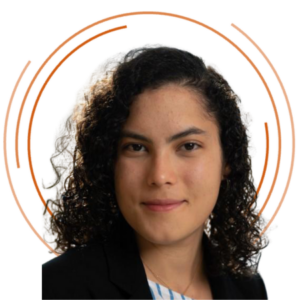
Marilia Ramos, MIB 2024
Learn from industry experts such as:
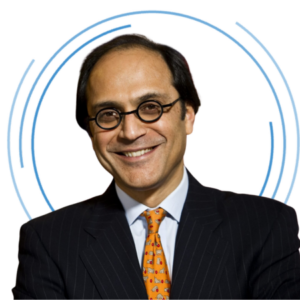
Bhaskar Chakravorti
Dean of Global Business
- Researches the impact of digital technologies and AI on lives and livelihoods and their impact on executive strategies and policies around the world.
- Chairman of the Advisory Board to the Mastercard Policy Center for the Digital Economy and creator of the widely-used Digital Evolution Index.
- Author of the Amazon best-selling book, “The Slow Pace of Fast Change: Bringing Innovations to Market in a Connected World” (Harvard Business Press) and “Defeating Disinformation” co-edited with Joel Trachtman, (Cambridge University Press).
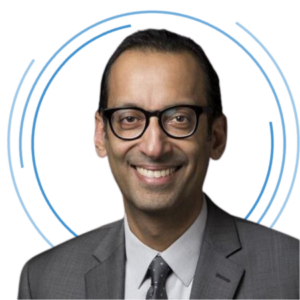
Alnoor Ebrahim
Professor of Management
- Researches leadership and strategy for social change, managing NGOs and social enterprises, impact measurement, and accountability.
- Author of “Measuring Social Change: Performance and Accountability in a Complex World” (Stanford University Press) which has received multiple awards, including from the Financial Times and Impact & Sustainable Finance Faculty Consortium, and The Alliance for Nonprofit Management.
- Serves on advisory boards to the Stanford Social Innovation Review (SSIR) and the World Bank’s Global Partnership for Social Accountability (GPSA)

Jette Steen Knudsen
Professor of Policy and International Business
- Research centers on the interface between government regulation and business actions with a particular focus on Corporate Social Responsibility (CSR).
- Studies the ability of governments in economically advanced industrialized nations to promote social change through regulation of social practices of home country multinationals in developing countries.
- Published works appear in highly-respected journals such as Business Ethics Quarterly, British Journal of Industrial Relations, Business and Politics, Comparative Political Studies, Journal of Business Ethics, Policy and Politics, Political Studies and Regulation and Governance.
- Consults on the governance of sustainability for leading companies and international organizations.
Transform your commitment to advancing global change into a rewarding business career.
Connect with us and learn what Fletcher can do for you.